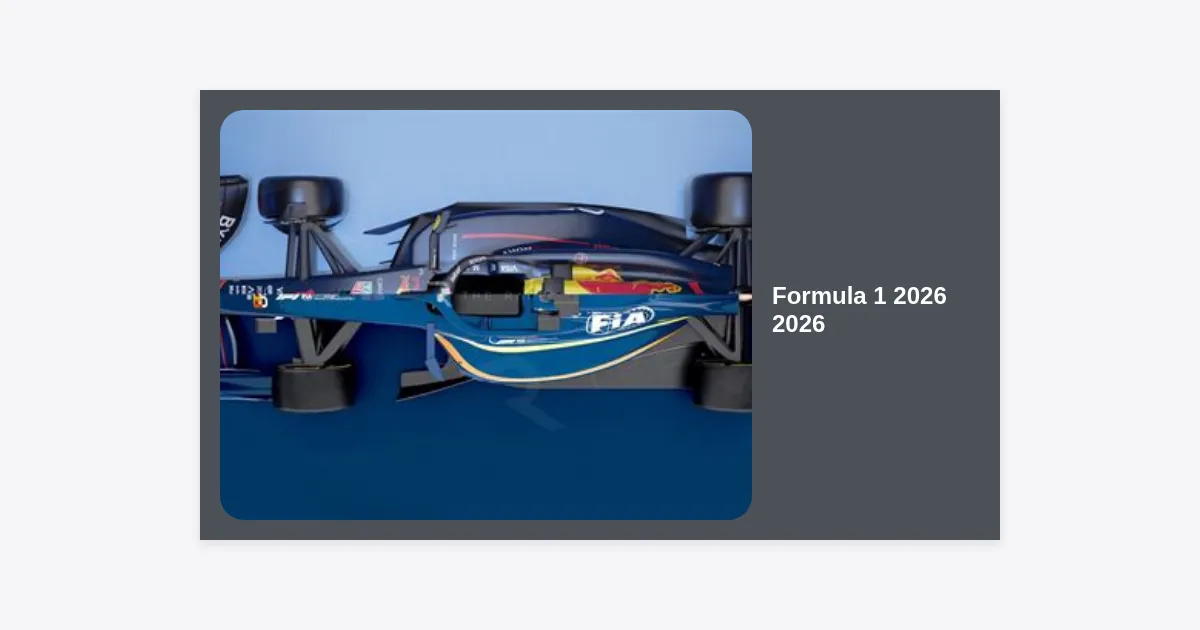
The landscape of elite motorsport is about to undergo its most significant transformation in decades. As fans and teams look toward the dawn of Formula 1 2026, the sport is preparing for a seismic shift in technology, sustainable engineering, and competitive balance. This isn’t just another minor update to the rulebook; it is a complete reinvention of what a Grand Prix car represents in the modern era.
Whether you are a casual viewer or a die-hard technical analyst, understanding the Formula 1 2026 2026 transition is crucial. With new power unit regulations, innovative active aerodynamics, and the entry of global automotive giants like Audi and Ford, the grid we see today will look vastly different in just a few years. In this comprehensive guide, we will break down every technical, sporting, and financial change coming your way.
Table of Contents
- 1. The Power Unit Revolution: Hybrid Power Reimagined
- 2. 100% Sustainable Fuels: Racing for the Planet
- 3. Active Aerodynamics and the ‘Agile Car’ Concept
- 4. Chassis and Dimensions: Smaller, Lighter, Faster?
- 5. New Manufacturers: Audi, Ford, and Honda’s Return
- 6. The 2026 Driver Market: Who Goes Where?
- 7. How 2026 Regulations Will Improve the Show
- 8. Conclusion: The Future of Speed
The Power Unit Revolution: Hybrid Power Reimagined
The heart of the Formula 1 2026 changes lies beneath the engine cover. While the current 1.6-liter V6 turbocharged architecture remains, the way it generates and uses energy is being completely overhauled. The goal is to create a more efficient system that appeals to road car manufacturers focusing on electrification.
The most significant change is the removal of the MGU-H (Motor Generator Unit – Heat). This component, while technically impressive, was incredibly expensive and complex to develop, acting as a barrier for new manufacturers entering the sport. By removing it, F1 has paved the way for brands like Audi to join the fray.
To compensate for the loss of the MGU-H, the MGU-K (Motor Generator Unit – Kinetic) will see its power output tripled. In the current era, the battery provides about 120kW of power. In the Formula 1 2026 2026 season, this will jump to a massive 350kW. This creates a nearly 50/50 split between internal combustion power and electric power, making F1 the most powerful hybrid platform in the world.
100% Sustainable Fuels: Racing for the Planet
Formula 1 has committed to being Net Zero Carbon by 2030, and the 2026 regulations are the cornerstone of this promise. For the first time, every car on the grid will run on 100% sustainable fuels. This is a game-changer for the global automotive industry.
Unlike biofuels that compete with food crops, these “drop-in” fuels are created using carbon capture technology or municipal waste. This means the fuel consumes as much carbon during its production as it emits during combustion. Proponents argue that this technology could save the internal combustion engine for road cars by providing a carbon-neutral alternative to electric vehicles (EVs).
“The 2026 fuel regulations are designed to be lab-tested on the track and then scaled for the billions of internal combustion engines currently on the road today.” — FIA Technical Department
Active Aerodynamics and the ‘Agile Car’ Concept
With the shift towards more electric power, F1 faced a challenge: how to prevent cars from running out of battery on long straights. The solution is Active Aerodynamics. This is one of the most exciting aspects of the Formula 1 2026 technical regulations.
The 2026 cars will feature movable front and rear wings. These will operate in two primary modes:
- Z-Mode (High Downforce): Used in corners to maximize grip and cornering speed.
- X-Mode (Low Drag): Used on straights to reduce air resistance, allowing the car to reach high top speeds even as electrical deployment tapers off.
This system replaces the current DRS (Drag Reduction System) as we know it. Instead of just a trailing car getting a boost, every driver will have access to these aerodynamic shifts to manage energy and pace efficiently.
Chassis and Dimensions: Smaller, Lighter, Faster?
One of the biggest complaints from drivers and fans in recent years has been the size and weight of modern F1 cars. They have often been described as “boats” that struggle on tight street circuits like Monaco. The Formula 1 2026 2026 vision addresses this by introducing the “Agile Car” concept.
The dimensions of the cars will be reduced to make them more nimble:
- Wheelbase: Reduced from 3600mm to 3400mm.
- Width: Reduced from 2000mm to 1900mm.
- Weight: The FIA aims to reduce the minimum weight by 30kg, though teams are currently debating the feasibility of this given the heavier batteries.
- Tyres: The 18-inch wheels remain, but the width of the tyres will be slightly reduced to lower drag.
These changes are designed to facilitate closer racing. Smaller cars mean more room on the track for overtaking, especially on narrow circuits, and a lighter car is naturally more responsive to driver inputs.
New Manufacturers: Audi, Ford, and Honda’s Return
The 2026 regulations have already achieved one major goal: attracting new manufacturers. The Formula 1 2026 grid will see a massive shake-up in engine suppliers.
Audi: The German giant has officially acquired the Sauber team (currently Stake F1 team). They are building their own power unit in Neuburg, Germany, marking the first time in decades that a major German manufacturer has challenged Mercedes on its own terms.
Ford: In a surprising move, Ford is returning to F1 in partnership with Red Bull Powertrains (RBPT). Ford will provide technical expertise in battery cell technology and software, helping Red Bull manufacture their own engines for the first time.
Honda: After “officially” leaving the sport, Honda realized the 2026 rules aligned perfectly with their carbon-neutral goals. They have signed an exclusive deal to power Aston Martin starting in 2026, ending Aston’s long-standing relationship with Mercedes.
The 2026 Driver Market: Who Goes Where?
The technical shift of Formula 1 2026 2026 has already triggered a wild “Silly Season.” Drivers want to be in the best possible position when the new rules hit, as regulation changes often lead to a change in the pecking order (much like Mercedes dominating in 2014 or Red Bull in 2022).
Lewis Hamilton’s move to Ferrari for 2025 was the first major domino to fall, ensuring he is embedded in the Scuderia before the 2026 changes. Meanwhile, Max Verstappen’s future remains a topic of intense speculation—will he stay with the new Red Bull-Ford project, or could a move to Mercedes or even Aston Martin be on the cards?
Teams are prioritizing experience. Development of a brand-new car and engine requires drivers who can provide precise feedback. This is why we see veterans like Fernando Alonso signing extensions that take them into the 2026 era.
How 2026 Regulations Will Improve the Show
At the end of the day, all these changes serve one purpose: better racing. The FIA has used advanced CFD (Computational Fluid Dynamics) to ensure that the 2026 aero packages produce “cleaner” air. This allows cars to follow each other much more closely through high-speed corners without losing front-end grip.
Furthermore, the Manual Override Mode will be introduced. Moving away from the simple DRS flap, this mode will allow a following car to use extra electrical energy to facilitate an overtake, creating a tactical “push-to-pass” dynamic similar to IndyCar or Formula E.
Key Statistics for 2026
| Feature | Current (2024/25) | Proposed (2026) |
|---|---|---|
| Electrical Power | 120 kW (160 hp) | 350 kW (470 hp) |
| Fuel Type | E10 (10% Ethanol) | 100% Sustainable Fuel |
| Weight | 798 kg | 768 kg (Target) |
| MGU-H | Yes | No |
Conclusion: The Future of Speed
The Formula 1 2026 era represents a bold step into the future. By balancing the raw power of internal combustion with massive electrical energy and cutting-edge active aerodynamics, the sport is ensuring its relevance in a changing world. For the fans, this means a reset button has been hit—the dominance of one team could vanish overnight, replaced by a multi-way battle between historic names and new titans.
Key Takeaways:
- Increased Electrification: Nearly 50% of the car’s power will be electric.
- Sustainability: 100% carbon-neutral fuels define the new power units.
- Agility: Smaller, lighter cars with active aero will improve overtaking.
- New Faces: Audi and Ford enter the sport, changing the competitive landscape.
As we get closer to the first light out of the Formula 1 2026 2026 season, the anticipation will only grow. Stay tuned as teams begin to reveal their prototype designs and engine fire-up videos. The future of Formula 1 is almost here, and it’s faster, greener, and more competitive than ever.