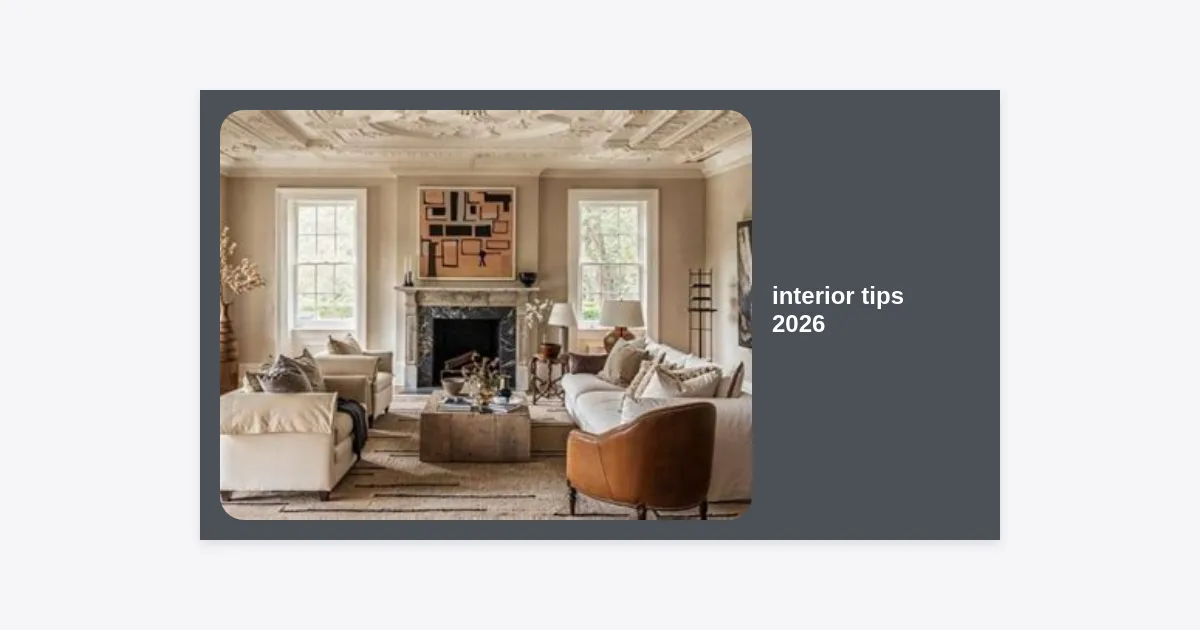
As we approach the latter half of the decade, the way we inhabit our living spaces is undergoing a radical transformation. If you are looking for the most effective interior tips 2026, you have come to the right place. We are moving beyond mere aesthetics; the focus is now on how a home feels, functions, and interacts with the planet. In 2026, interior design is a fusion of high-tech integration and high-touch organic materials, creating environments that are as intelligent as they are comforting.
Table of Contents
- 1. The Rise of Sensory-First Design
- 2. Biophilic Design 2.0: Beyond Just Houseplants
- 3. Invisible Smart Home Integration
- 4. Sustainable Luxury and Circular Materials
- 5. The 2026 Color Palette: Earthy and Ethereal
- 6. Fluid Layouts and Multifunctional Rooms
- 7. Tactile Textiles and 3D Wall Coverings
- 8. Circadian Lighting for Ultimate Wellness
- 9. Retro-Futurism: 1970s Meets 2030
- 10. Curated Maximalism: The Anti-Minimalist Movement
- 11. Actionable Interior Tips 2026 for Every Room
- 12. Conclusion: Your Future Home Awaits
1. The Rise of Sensory-First Design
By 2026, the industry has shifted away from the “Instagrammable” look toward a “livable” feel. Sensory design involves creating spaces that appeal to all five senses, not just sight. This means considering the acoustic properties of a room, the scent of the materials used, and the tactile experience of every surface.
To implement this, consider using sound-absorbing acoustic panels that double as art. Use natural fragrances like cedar or bergamot integrated into HVAC systems. Research shows that a multi-sensory environment can reduce stress levels by up to 30%, making this one of the most vital interior tips 2026 for high-stress urban dwellers.
2. Biophilic Design 2.0: Beyond Just Houseplants
We’ve graduated from having a few succulents on a shelf. Biophilic design in 2026 is about systemic integration. This involves building-integrated greenery, such as interior living walls that act as natural air purifiers. It also includes “nature-mimicking” architecture, where the curves of furniture and the flow of rooms copy natural patterns like the Fibonacci sequence.
Implementing Living Systems
Instead of separate pots, 2026 trends suggest sunken floor planters or overhead trellis systems. These features don’t just look beautiful; they improve indoor air quality and provide a psychological link to the outdoors, which is essential as remote work remains a permanent fixture of our lives.
3. Invisible Smart Home Integration
The “clunky” smart home is dead. In 2026, the most sought-after homes feature “Invisible Tech.” This means smart speakers hidden behind plaster, wireless charging stations built directly into stone countertops, and smart glass that changes opacity for privacy without the need for curtains.
When looking for interior tips 2026, prioritize tech that enhances rather than distracts. Voice and gesture-controlled environments are becoming standard. Imagine a kitchen where the backsplash is actually a touch-screen interface for recipes, but appears as seamless marble when not in use.
4. Sustainable Luxury and Circular Materials
Sustainability is no longer an optional add-on; it is the foundation of design. The circular economy has introduced materials like mycelium (mushroom) leather, seaweed-based textiles, and furniture made from 100% recycled ocean plastics that look indistinguishable from high-end resins.
The Shift to “Slow Decor”
Much like slow fashion, “slow decor” focuses on pieces that are built to last a lifetime and can be completely recycled at the end of their cycle. Investment pieces made from reclaimed ancient timber or hand-forged metals are highly prized. Interior tips 2026 emphasize quality over quantity, urging homeowners to avoid “fast furniture” that ends up in landfills.
5. The 2026 Color Palette: Earthy and Ethereal
Color experts suggest that 2026 will be defined by two distinct directions: grounded earth tones and ethereal, digital-inspired hues. We are seeing a move toward “Terracotta Blush,” “Deep Forest Teal,” and “Oxidized Copper.” These colors provide a sense of stability in an ever-changing world.
On the other hand, “Cosmic Violet” and “Electric Mint” are being used as accent colors, reflecting our increasing immersion in digital and virtual spaces. The key is balance—using grounded tones for the walls and floors while letting futuristic accents pop in accessories and lighting.
6. Fluid Layouts and Multifunctional Rooms
The rigid definition of a “dining room” or “bedroom” is fading. As floor plans become more compact in urban centers, fluid layouts are essential. Moving walls, Murphy beds that transform into desks, and retractable kitchen islands are the hallmarks of a 2026 home.
“The home of 2026 must be a chameleon, adapting from a high-performance office during the day to a restorative sanctuary at night.” — Global Design Outlook 2026
Utilizing modular furniture is one of the best interior tips 2026. Look for sofas that can be rearranged into various configurations or dining tables that can be converted into professional workstations with built-in cable management.
7. Tactile Textiles and 3D Wall Coverings
Flat walls are a thing of the past. 3D wall coverings made from sustainable felt, carved wood, or recycled cork are trending. These materials add depth and texture, making rooms feel more cocoon-like and acoustically private.
In textiles, we see a return to heavy, honest weaves. Think chunky wool throws, bouclé with even more pronounced loops, and raw silk. The objective is to create a physical environment that contrasts with the smooth, flat surfaces of our digital screens.
8. Circadian Lighting for Ultimate Wellness
One of the most impactful interior tips 2026 involves lighting. Lighting systems are now programmed to follow the human circadian rhythm. In the morning, the lights emit a blue-toned “cool” light to boost cortisol and energy. As the day progresses, they transition to a warm, amber glow to encourage melatonin production and better sleep.
Smart Window Treatments
Pairing this with automated blinds that track the sun’s position can maximize natural light while preventing glare. This holistic approach to light significantly improves mood and productivity, demonstrating how design can be a tool for mental health.
9. Retro-Futurism: 1970s Meets 2030
We are seeing a nostalgic revival of 1970s silhouettes—sunken lounges, conversation pits, and rounded furniture edges—updated with 21st-century materials. This “Retro-Futurism” combines the warmth and social focus of the 70s with the sleek, clean lines of the future.
To achieve this look, look for furniture with chrome accents paired with warm corduroy or velvet fabrics. It’s about creating a space that feels familiar yet excitingly new. This trend celebrates a time when people focused more on face-to-face interaction than screen time.
10. Curated Maximalism: The Anti-Minimalist Movement
While minimalism had its decade, 2026 belongs to curated maximalism. This isn’t about clutter; it’s about a deliberate display of personal history, travel, and hobbies. It’s “clutter-core” but with a high-end designer’s eye. Every object has a story.
Use gallery walls that mix fine art with personal sketches. Display collections on open shelving, but keep the color palette cohesive to prevent the room from feeling overwhelming. This approach allows your personality to shine through Every corner of your home.
11. Actionable Interior Tips 2026 for Every Room
To help you implement these trends, here is a breakdown of interior tips 2026 by room:
- The Kitchen: Opt for “hidden appliances” and natural stone islands with integrated induction heating. Add a small indoor herb garden with automated LED growth lights.
- The Living Room: Invest in a modular “cloud” sofa and a statement 3D-printed coffee table. Focus on a “low-tech” zone where phones are discouraged.
- The Bedroom: Prioritize sound-dampening textures and circadian lighting. Use “smart mattresses” that regulate temperature throughout the night.
- The Home Office: Use ergonomic furniture that doesn’t look like office furniture. Integrate plenty of plants and ensure you have a professional, art-filled background for video calls.
- The Bathroom: Think “Home Spa.” Use natural pebble flooring, steam showers with aromatherapy, and voice-controlled water temperature settings.
Ready to Re-Design?
Download our comprehensive 2026 Interior Design Checklist to start your home transformation today!
12. Conclusion: Your Future Home Awaits
The interior tips 2026 we’ve explored today all point toward a single goal: creating a home that supports your physical and mental well-being while respecting the planet. Whether you are integrating invisible tech or opting for a more biophilic approach, the key is to ensure your space reflects your unique human experience.
As you begin your renovation or redecoration journey, remember that the best design is the one that makes you feel most at home. Stay curious, stay sustainable, and don’t be afraid to mix the old with the new. The future of interior design is bright, tactile, and incredibly personal.
Key Takeaways:
- Sensory focus: Design for touch, sound, and smell, not just sight.
- Eco-innovation: Use circular materials like mycelium or recycled plastics.
- Health first: Implement circadian lighting and biophilic elements.
- Flexibility: Opt for modular furniture and fluid room layouts.