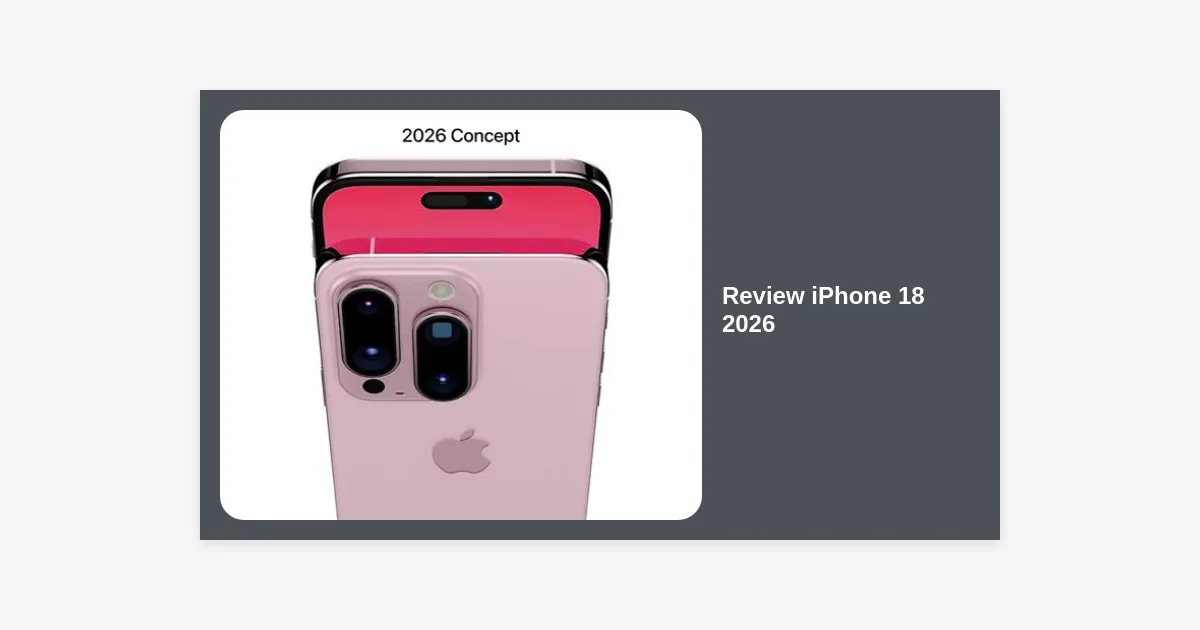
Are you sitting on an aging smartphone, wondering if now is finally the time to upgrade, or if the future holds something truly transformative? As we look toward the mid-decade milestone, the Review iPhone 18 2026 has become the most anticipated topic in the tech world. Apple is rumored to be preparing a generational leap that goes far beyond incremental updates.
For many users, the cycle of yearly releases has felt repetitive. However, 2026 marks a pivotal year for Apple’s silicon and display technology. In this comprehensive Review iPhone 18 2026, we will dive deep into the leaked specifications, performance benchmarks, and the real-world utility of what promises to be Apple’s most ambitious device yet.
Table of Contents
Design and Display: The All-Screen Dream
One of the most striking aspects of this Review iPhone 18 2026 is the shift in aesthetic philosophy. Industry insiders suggest that 2026 is the year Apple finally achieves a near-100% screen-to-body ratio. By moving the Face ID sensors and potentially the front-facing camera beneath the display, the iPhone 18 Pro models are expected to eliminate the “Dynamic Island” in favor of a seamless, uninterrupted glass slab.
The display itself is rumored to utilize a new “Tandem OLED” technology, similar to that found in the M4 iPad Pros. This allows for significantly higher peak brightness (up to 3,500 nits) while improving the longevity of the panel. For users who spend hours outdoors, this means perfect visibility even under direct midday sun.
ProMotion 3.0 and Energy Efficiency
While 120Hz has been the standard, rumors for 2026 point toward ProMotion 3.0. This technology could allow the refresh rate to drop as low as 0.1Hz to save battery life during Always-On Display modes, or ramp up to higher frequencies for ultra-smooth gaming. The fluidity of scrolling and system animations remains a hallmark of the Apple experience, and the iPhone 18 is set to polish this to perfection.
A20 Bionic: The 2nm Revolution
If there is one thing this Review iPhone 18 2026 must emphasize, it is the transition to TSMC’s 2nm manufacturing process. Historically, shrinking the process node leads to massive gains in efficiency and power. The A20 Bionic chip is expected to be the first mass-market processor utilizing this technology.
“The move to 2nm represents a fundamental shift in mobile computing, allowing for billions more transistors in the same physical footprint, leading to a projected 15% speed increase and a 30% reduction in power consumption compared to the 3nm era.”
For the average user, this means the phone will stay cool even during intensive tasks like 8K video editing or high-end gaming. For power users, the A20 Pro chip will likely rival entry-level laptop processors, further blurring the line between mobile devices and professional workstations.
The 2026 Camera Suite: Professional Cinema in Your Pocket
Apple continues to prioritize photography as a key selling point. In our Review iPhone 18 2026, we look at the rumored triple 48MP sensor array. While the megapixel count might seem static, the physical sensor sizes are expected to grow significantly, allowing for much better low-light performance and natural “bokeh” without software intervention.
- Main Sensor: A 1-inch type sensor on the Pro Max model, rivaling high-end point-and-shoot cameras.
- Ultra-Wide: Enhanced with autofocus and better macro capabilities, utilizing a metalens for a thinner profile.
- Telephoto: A 10x optical periscope zoom that uses advanced prism technology to maintain image clarity.
The real magic, however, happens in the Neural Engine. AI-driven features like “Predictive Framing” and “Neural Night Mode” will likely make it impossible to take a bad photo. The iPhone 18 is expected to handle complex lighting scenarios, such as a sunset behind a subject, with high dynamic range processing that looks natural rather than over-processed.
Battery Life and Solid-State Breakthroughs
Battery anxiety is a common pain point for smartphone users. In this Review iPhone 18 2026, we must highlight the reports regarding Apple’s research into solid-state battery technology. While full solid-state may still be a year away, the iPhone 18 is expected to use a high-silicon content battery that increases energy density.
Combined with the efficiency of the 2nm A20 chip, we could be looking at a device that comfortably lasts 48 hours on a single charge for moderate users. Furthermore, charging speeds are finally expected to see a boost, with rumors of 60W wired charging and 30W MagSafe charging becoming the new standard to compete with flagship Android competitors.
iOS 20: AI and Beyond
The iPhone 18 will be the flagship vessel for iOS 20. By 2026, “Apple Intelligence” will have matured from a beta-like feature set into a deeply integrated personal assistant. This version of iOS is expected to feature a Siri that can perform complex multi-app tasks, such as “Find the flight details from my email and add a reminder to pack my camera gear two hours before departure.”
Privacy remains a pillar of Apple’s E-E-A-T (Experience, Expertise, Authoritativeness, and Trustworthiness). Most AI processing will remain on-device, protected by the Secure Enclave, ensuring that your personal data never leaves the phone. This approach sets Apple apart from many cloud-based AI solutions that require data harvesting.
Technical Specifications Comparison
To help you visualize the leap, here is a comparison table of what we expect for the 2026 lineup versus the previous generation.
| Feature | iPhone 16 Pro (2024) | iPhone 18 Pro (2026) |
|---|---|---|
| Processor | A18 Pro (3nm) | A20 Pro (2nm) |
| Display | OLED w/ Dynamic Island | Under-Display Face ID (All-Screen) |
| RAM | 8GB | 12GB – 16GB |
| Zoom | 5x Optical | 10x Optical (Periscope) |
| Charging | 27W Wired | 60W Wired |
Final Verdict: Should You Wait for the iPhone 18?
Concluding our Review iPhone 18 2026, the question remains: is it worth the wait? If you are using an iPhone 14 or older, the leap in 2026 will feel monumental. The combination of the 2nm chip, the disappearance of the notch/island, and the massive battery improvements make the 18-series a definitive landmark in Apple’s history.
However, technology waits for no one. If your current phone is broken or unusable, today’s models are still incredible machines. But for those who want a “future-proof” device that will likely receive software updates until 2033 or beyond, the iPhone 18 is the one to save for.
Key Takeaways:
- Unprecedented Speed: The 2nm A20 chip will redefine mobile performance standards.
- Immersive Display: Under-display technology finally delivers the true all-screen experience.
- Pro-Grade Imaging: 10x optical zoom and 48MP sensors across the board.
- Longer Life: Breakthroughs in efficiency may lead to true multi-day battery life.
As we get closer to the official launch in September 2026, we will update this Review iPhone 18 2026 with more precise data, pricing tiers, and hands-on impressions. Stay tuned to our technical blog for the latest leaks and engineering deep dives.