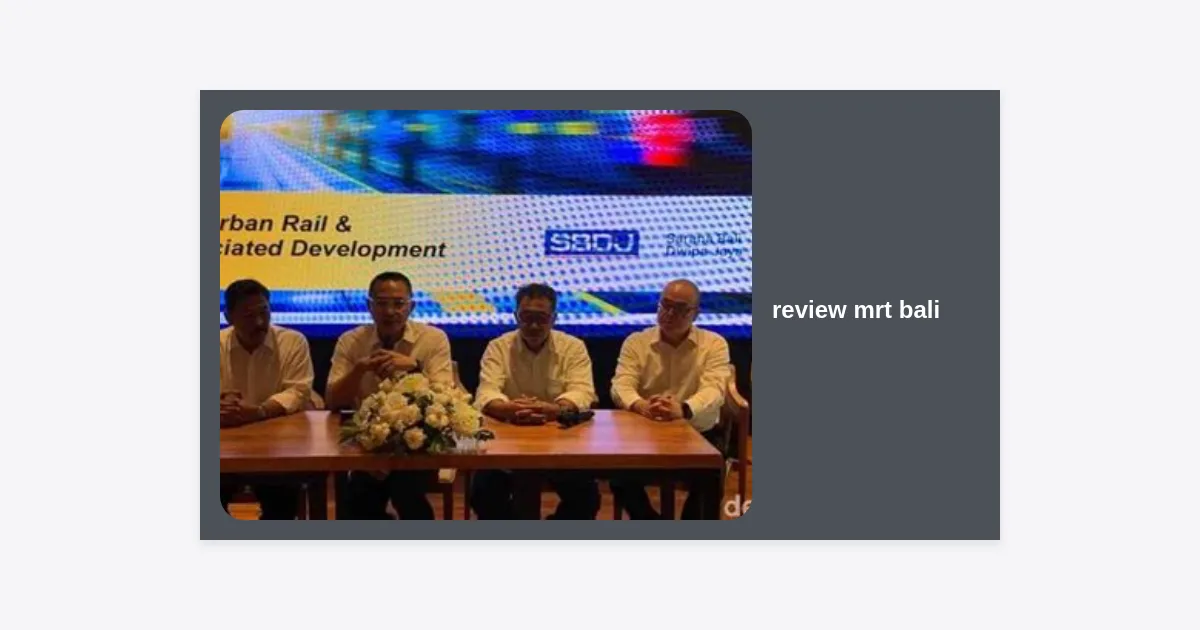
Bali, the Island of the Gods, has long been a dream destination for travelers worldwide. However, as tourism has flourished, so has one of the island’s most pressing issues: traffic congestion. For anyone who has spent hours stuck on the road between Ngurah Rai International Airport and Seminyak, the prospect of a high-speed transit system is more than just a convenience—it is a necessity. In this comprehensive review MRT Bali, we take a deep dive into the upcoming Bali Urban Subway, exploring its routes, the construction timeline, and how it aims to revolutionize the way we experience this tropical paradise.
- The Traffic Crisis: Why Bali Needs an MRT
- Overview: The Bali Urban Subway Project
- Detailed Route Breakdown: Phase 1 to Phase 4
- Technical Review: Challenges of Building Underground
- Impact on Tourism and the Digital Nomad Lifestyle
- Expected Ticket Pricing and Accessibility
- Current Transport Alternatives in Bali
- Conclusion: Is the Bali MRT the Ultimate Solution?
The Traffic Crisis: Why Bali Needs an MRT
To provide an honest review MRT Bali plans, one must first understand the severity of the current logistics landscape. For years, the primary mode of transportation in Bali has been scooters and private cars. While charming, the infrastructure of the island—consisting of narrow, ancient roads—was never designed to handle the millions of tourists that arrive annually.
Data from the Bali Department of Transportation indicates that traffic volume in key hubs like Kuta and Canggu frequently exceeds road capacity by over 200% during peak seasons. This bottleneck doesn’t just frustrate tourists; it impacts the local economy and environment. The "Review MRT Bali" sentiment among locals and frequent visitors has shifted from a hypothetical dream to an urgent demand for modernization.
"The time spent in traffic is time taken away from the beauty of the island. A subterranean solution is the only way to move forward without destroying the cultural landscape above." – Local Urban Planner.
Overview: The Bali Urban Subway Project
The project, officially branded as the Bali Urban Subway, is an ambitious infrastructure undertaking led by PT Sarana Multi Infrastruktur (SMI) in partnership with the Bali Provincial Government. Unlike the MRT in Jakarta, which features significant elevated sections, the Bali version is designed to be almost entirely underground. This is a critical point in any review MRT Bali because it respects the local cultural regulations that forbid structures taller than a coconut tree (approximately 15 meters).
Groundbreaking occurred in mid-2024, signaling a firm commitment to the project. The total investment is estimated to be in the billions of dollars, funded through a mix of public-private partnerships (PPP). This ensures that the project benefits from private sector efficiency while maintaining public oversight.
Detailed Route Breakdown: Phase 1 to Phase 4
The success of the review MRT Bali hinges on the accessibility of its routes. The project is divided into four strategic phases designed to connect the most congested tourism corridors.
Phase 1: The Gateway Corridor
Phase 1 is the most anticipated section. It connects I Gusti Ngurah Rai International Airport to the high-density areas of Kuta and Seminyak. For many travelers, this journey currently takes 60 to 90 minutes; the MRT aims to reduce this to under 15 minutes.
- Airport Station: Directly connected to the international terminal.
- Kuta Central: Located near the major shopping and beach access points.
- Seminyak Hub: Serving the luxury villa and boutique districts.
Phase 2: The Southern Expansion
This phase extends the line from the Airport down to Jimbaran and Nusa Dua. These areas are home to massive high-end resorts and the Bali International Convention Center. By linking these zones, the MRT will cater to both leisure travelers and the MICE (Meetings, Incentives, Conferences, and Exhibitions) industry.
Phase 3 & 4: The Cultural and Northern Links
Phase 3 is planned to connect towards Sanur, known for its sunrises and fast-boat connections to the Nusa Islands. Phase 4 is the most ambitious, aiming to reach Ubud. Many in the review MRT Bali community are curious about how the subway will navigate the steep ravines of Ubud, but officials remain confident in the boring technology being used.
| Phase | Primary Route | Expected Impact |
|---|---|---|
| Phase 1 | Airport – Kuta – Seminyak | High: Drastic reduction in airport transfer time. |
| Phase 2 | Airport – Jimbaran – Nusa Dua | Medium: Benefits resort guests and commuters. |
| Phase 3 | Sanur – Denpasar Central | Medium: Connects residential and ferry ports. |
| Phase 4 | Ubud – Northern Corridors | High: Long-term relief for central Bali traffic. |
Technical Review: Challenges of Building Underground
A technical review MRT Bali would be incomplete without discussing the engineering hurdles. Bali is a volcanic island with complex geological layers. Using Tunnel Boring Machines (TBMs) in this environment requires extreme precision to avoid disturbing groundwater levels and the foundations of sacred temples.
Furthermore, the spiritual landscape of Bali means that construction must pause during significant Hindu ceremonies. The developers have committed to a "Green Construction" philosophy, ensuring minimal surface disruption. This underground focus is why the review MRT Bali project is often compared to Singapore’s highly efficient system rather than more sprawling outdoor rail networks.
Impact on Tourism and the Digital Nomad Lifestyle
For the thousands of digital nomads living in Canggu and Pererenan, the review MRT Bali represents a lifestyle upgrade. Currently, moving between the "work hubs" of Seminyak and the "retreats" of Ubud is a day-long commitment. With an efficient MRT, the island becomes much "smaller," allowing for better movement of labor and tourism spend.
Actionable Tip: If you are planning to invest in property in Bali, look at the proposed station locations in Phase 1. Real estate values near planned transit hubs are expected to see a significant uptick, similar to the trends observed around the Jakarta MRT lines.
Expected Ticket Pricing and Accessibility
While official fares have not been finalized, the provincial government has hinted at a tiered pricing system. To maintain a positive review MRT Bali sentiment among residents, there will likely be a subsidized rate for local residents holding an Indonesian KTP, while tourists will pay a standard "visitor fare."
Compared to the cost of a private car transfer (which ranges from 150,000 to 300,000 IDR), the MRT is expected to be a much more budget-friendly and predictable option. Expect to see integrated payment systems where you can use your phone or a multi-purpose transit card.
Current Transport Alternatives in Bali
Since the MRT is still in its construction phases, travelers must rely on existing methods. Our current review MRT Bali context requires a look at what we are transitioning from:
- Gojek/Grab: The most popular and flexible options. Great for short distances but vulnerable to traffic.
- Blue Bird Taxis: The gold standard for metered reliability, though more expensive during long gridlocks.
- Scooter Rentals: The fastest way to move, but requires an international driving permit and carries significant safety risks.
- Kura-Kura Bus: A shuttle service that follows set routes, though it is still subject to road traffic.
Want to see the projected map in detail?
Conclusion: Is the Bali MRT the Ultimate Solution?
In conclusion, our review MRT Bali finds the project to be a monumental step in the right direction. While the construction years will undoubtedly present challenges, the long-term benefits—reduced carbon emissions, predictable travel times, and enhanced tourist experiences—cannot be overstated.
Key Takeaways:
- The Bali MRT is primarily an underground system to respect cultural height limits.
- Phase 1 will link the Airport to Kuta/Seminyak, solving the most critical traffic hub.
- The project is a necessary evolution for Bali to remain a world-class destination.
- For now, continue to use ride-sharing apps but keep an eye on station developments for future bookings.
As the island waits for the first train to roll out, the "Review MRT Bali" remains a story of hope and progress. Stay tuned to official updates from the Bali Provincial Government to see how this subway system will eventually define the new era of Balinese travel.